NotebookLM Ate My Board Report (And Made It Better)
You have 47 documents, 3 spreadsheets, and a week of meeting notes. The board wants a 2-page summary by Friday. Here's how I stopped drowning in sources.
November 5, 2025
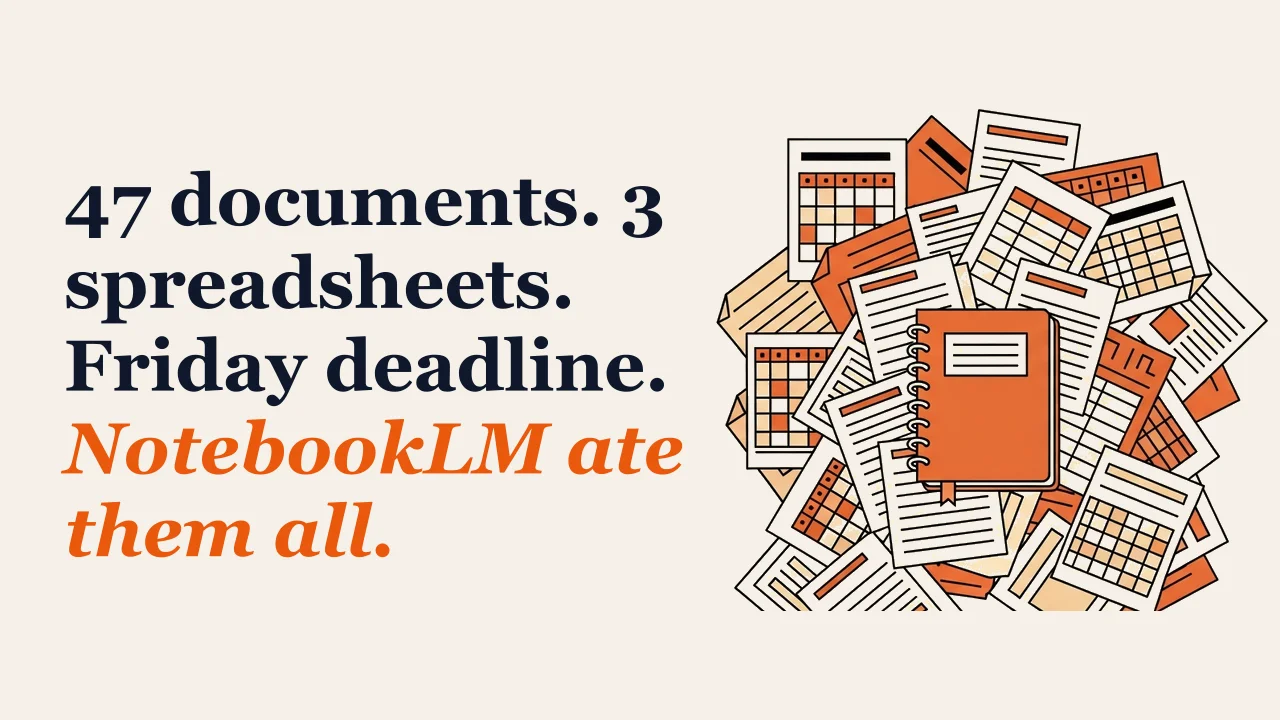
The Board Report From Hell
The setup: Every quarter, same drill. The board wants a concise update on enrollment, finances, program developments, and strategic initiatives. Sounds simple. Except the information lives in:
- Google Drive folders nested three levels deep
- A finance spreadsheet that gets updated weekly
- Meeting notes from leadership team sessions
- Email threads where actual decisions got made
- That one Slack conversation where we changed direction on the capital campaign
The old way: I’d spend a full day just gathering. Then another day synthesizing. Then a third day actually writing something coherent. Three days for a two-page document.
What broke me: Last quarter, I missed a key decision we’d made in a staff meeting because I couldn’t find my notes. The board asked about it. I looked unprepared. I was unprepared.
Enter NotebookLM
What it actually is: Google’s AI notebook that lets you upload sources and have conversations with them. Think of it as ChatGPT that can only reference documents you’ve given it - no hallucination from random internet training data.
NotebookLM
FreeUpload PDFs, Google Docs, websites. Ask questions. Get answers with citations to specific sources.
Why it’s different for this use case:
- Everything is grounded in your actual documents
- Citations point to specific passages
- It handles multiple sources simultaneously
- Audio overview feature creates a “podcast” summary (surprisingly useful for review)
The Workflow I’ve Landed On
Phase 1: The Source Dump (30 minutes)
Upload everything remotely relevant:
- Previous board report
- Current enrollment data
- Financial summary
- Strategic plan document
- Meeting notes from the quarter
- Any significant email threads (copy/paste into a doc)
Don’t curate too carefully. Let the AI do the filtering. Your job is completeness.
Phase 2: The Interrogation (45 minutes)
Ask structured questions:
"What were the major enrollment changes this quarter compared to last?"

"Summarize all decisions made about the capital campaign across these sources."

"What strategic plan goals showed progress this quarter? What showed setbacks?"

"Are there any contradictions between what we planned and what we discussed in meetings?"
Key move
The Contradiction Question
That last question is gold. It surfaces the gaps between your stated strategy and your actual conversations. Boards notice these gaps. Better you find them first.
Phase 3: The Draft (60 minutes)
Ask NotebookLM to generate a first draft:
"Based on all sources, draft a 2-page board report covering:
1. Enrollment update (one paragraph)
2. Financial position (one paragraph)
3. Program highlights (3-4 bullet points)
4. Strategic initiative progress (one paragraph per initiative)
5. Challenges and decisions needed (one paragraph)

Keep the tone professional but direct. Flag anywhere you're uncertain about the data."
Phase 4: The Human Pass (45 minutes)
This is where you earn your salary:
- Verify the numbers match your spreadsheets
- Add context the documents don’t capture
- Adjust tone for your specific board
- Remove anything you’re not ready to discuss
What NotebookLM Gets Wrong
It’s not magic. Real limitations:
- Numbers can be misread - Always verify financial figures against source
- Nuance gets flattened - A “we’re considering” in meeting notes becomes “we decided” in the summary
- Recent context wins - If you uploaded an old strategic plan and new meeting notes, it might weight the old plan too heavily
- No emotional intelligence - It won’t flag that “we should discuss timeline” means “the board chair is worried”
The podcast feature is fun but weird - Creates a surprisingly engaging audio summary, but the AI “hosts” sometimes make things up. Use it for review, not as a source.
The Time Math
Before
3 full days gathering, synthesizing, and writing
After
Half a day with AI assistance, better citations, fewer missed details
saved by automating quarterly board report preparation
That's roughly 832 hours per year back in your life.
That’s not 16 hours of sitting around. That’s 16 hours you can spend on the actual strategic thinking your board expects from you.
The Bigger Question
Board reports are a clear automation win. But not everything is →
→ What to Automate vs. What to ProtectThis workflow works because board reports are synthesis tasks - pulling together existing information into a coherent narrative. The AI handles the gathering and first-pass organization. You handle the judgment and relationships.
Not every leadership task fits that pattern. Some things should stay manual, even if they’re tedious.
Start Here
Next board report:
- Create a NotebookLM notebook for Q2 (or whenever your next report is due)
- Start uploading sources now, as they’re created
- Ask it questions weekly, not just at deadline time
- Use it as a running research assistant, not just a last-minute summarizer
The tool gets better the more complete your sources are. Start early.

Want help building systems like this?
We help school leaders automate the chaos and get their time back.