Why AI Skills Are No Longer Optional for School Leaders
The gap between leaders who understand AI and those who don't is widening fast. Why AI literacy is now essential for school leadership.
January 12, 2026
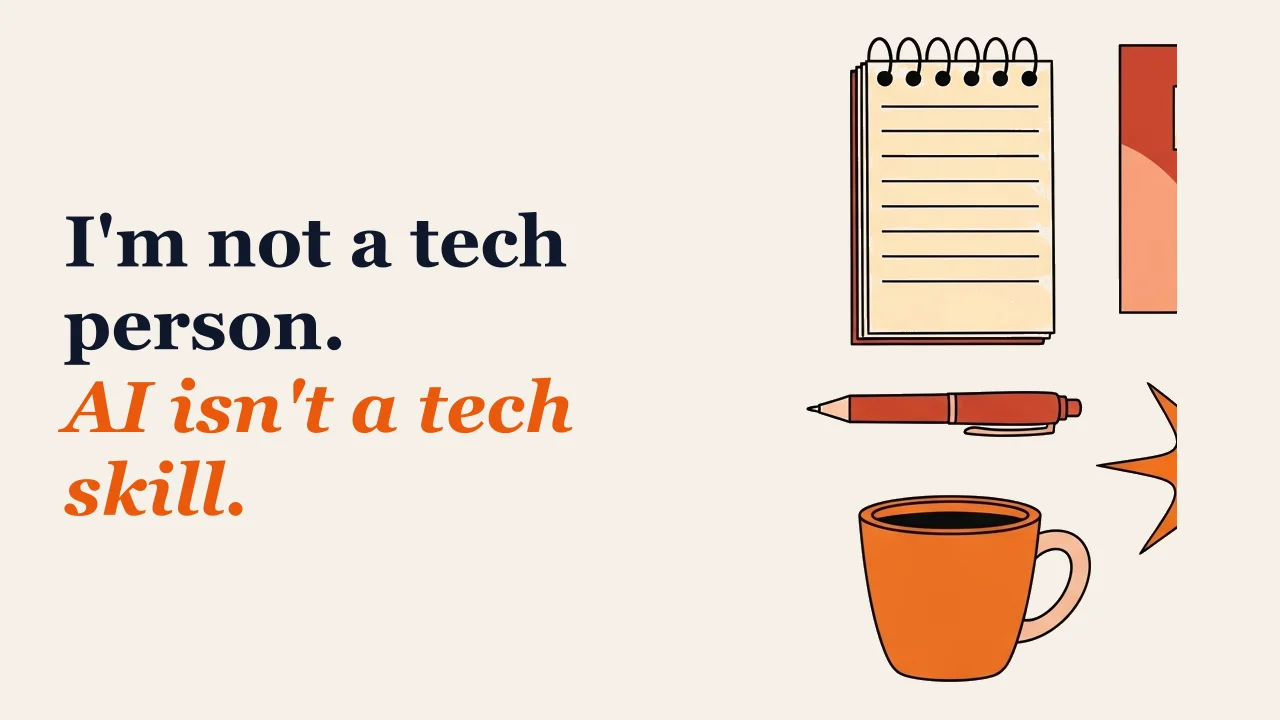
Last month, a Head of School asked me a question that stopped me cold.
“I keep hearing I need AI skills,” she said. “But I’m not a tech person. I’m an educator. Why should I spend my limited time learning tools that my IT team can handle?”
I understood the question. I’d asked it myself two years ago.
Here’s what I’ve learned since: AI isn’t a technology skill. It’s a leadership skill. And the gap between leaders who understand this and those who don’t is widening fast.
The Numbers That Changed My Mind
PwC’s 2025 Global AI Jobs Barometer analyzed nearly a billion job postings across six continents. Workers with AI skills now earn 56% more than peers in the same roles without those skills—double the premium from just one year earlier. Productivity growth has nearly quadrupled in industries most exposed to AI since 2022.
But here’s what matters most for school leaders.
RAND’s 2025 study surveyed over 16,000 students, parents, teachers, and administrators. The findings: 54% of students and 53% of teachers are already using AI for school. Yet only 35% of districts provide any AI training to students. Over 80% of students report that teachers never explicitly taught them how to use AI.
Watch out
The gap
More than half your students and teachers are using AI. Most are figuring it out alone. Who should be leading that conversation?
Why “My IT Team Can Handle It” Doesn’t Work
I used to delegate technology decisions entirely to my IT coordinator. “You’re the expert,” I’d say. “Just tell me what we need.”
This worked for network infrastructure and device management. It doesn’t work for AI.
When a teacher uses ChatGPT to draft report card comments, that’s not an IT issue. It’s a question of academic integrity, voice, workload, and professional judgment. When students use AI to complete assignments, that’s not about software—it’s about learning, assessment validity, and school culture.
Harvard Business Review’s research analyzed over 34 million managerial job postings and identified five critical skills leaders need in the AI age. None of them are technical. They’re all about judgment, orchestration, and organizational design.
Your IT team can set up the tools. They can’t decide how your school should think about AI. That’s your job.
What “AI Literacy” Actually Means for School Leaders
When I talk about AI skills for leaders, I don’t mean prompt engineering or understanding neural networks.
I mean three things.
Understanding what AI can (and can’t) do. You need enough hands-on experience to have informed opinions. Not expert opinions—informed ones. When a teacher tells you AI “doesn’t work” for their subject, you should know whether that’s true or whether they haven’t found the right application. When a parent complains that AI is “cheating,” you should be able to explain the difference between using AI as a shortcut and using it as a tool.
This doesn’t require deep technical knowledge. It requires personal experimentation.
Making strategic decisions about AI in your school. Should AI be allowed on assessments? Which ones? With what guidelines? How should teachers be using AI for planning, communication, and administration? What training do staff need? What policies do you need to create?
These decisions can’t be delegated. They require understanding your school’s context, values, and culture—and understanding enough about AI to make choices that align with them.
Leading the cultural shift. IMD’s 2026 analysis put it bluntly: “The most successful organizations will stop treating AI as a technology race and start treating it as a management revolution.”
AI adoption in schools isn’t about buying tools. It’s about changing how people work, learn, and think. That requires leadership—visible, informed leadership—not IT support.
What Happens When Leaders Don’t Engage
You lose control of the narrative. Students and teachers will use AI whether you have a policy or not. Without informed leadership, that use will be haphazard, inconsistent, and probably problematic. You’ll be reacting instead of guiding.
You miss efficiency gains. Research suggests that workers save an average of two hours per day using AI tools effectively. For school leaders drowning in administrative work, that’s transformative.
saved by automating administrative work
That's roughly 520 hours per year back in your life.
You can’t evaluate what you don’t understand. When vendors pitch AI products, when teachers propose AI-enhanced lessons, when board members ask about your AI strategy—you need enough knowledge to ask good questions. Otherwise, you’re making decisions blind.
You become the bottleneck. IDC estimates that skills shortages may cost the global economy up to $5.5 trillion by 2026. In schools, the bottleneck is often leadership hesitation. When you don’t understand AI, you slow down the people who do.
How I Made the Shift
When I realized AI literacy wasn’t optional, I didn’t sign up for a course or read a book. I started using the tools.
The first month was personal experimentation. One AI task per day. Not teaching others—just using it myself. Drafting emails to parents. Summarizing meeting notes. Creating agendas from scattered discussion points. Generating first drafts of policy documents.
Most of these saved time. Some didn’t work well. Both outcomes were valuable. I learned what AI was actually good at—and what still required my full attention.
Story
A confession: I was skeptical that AI could handle nuanced parent communication. Then I tested it on a tricky email about a student behavior issue. The draft was 80% there—and it took me 3 minutes to refine instead of 20 minutes to write from scratch. That’s when I understood the real value: not replacement, but acceleration.
Months two and three were about informed policy. With hands-on experience, I could finally have real conversations about AI policy. Not theoretical debates about what AI might do—practical discussions about what it actually does.
We developed guidelines for teacher use (administrative vs. instructional), student use (by grade level and assessment type), and communication transparency (when AI-assisted work needed disclosure). These policies weren’t perfect. But they were grounded in experience rather than fear.
The ongoing work is visible leadership. I didn’t hand AI training to IT. I was present for it. Sometimes I led sessions. Sometimes I just participated visibly.
This sent a message: AI is a leadership priority, not a tech initiative. When I trained 50+ teachers on AI, the most important thing wasn’t my expertise. It was my visible commitment.
Before
Delegating AI decisions to IT and hoping for the best
After
Personal experimentation → informed policy → visible leadership
The Skills That Actually Matter
Based on my experience and Harvard Business Review’s framework, here’s what I’d prioritize:
Build diverse networks. Talk to leaders in other industries about how they’re using AI. Talk to teachers who are experimenting. Talk to skeptics. Exposure builds fluency faster than courses.
Learn to orchestrate, not execute. Your job isn’t to be the AI expert. It’s to bring together the people, tools, and processes that make AI work for your school. Think conductor, not soloist.
Coach and develop others. Create psychological safety for experimentation. Celebrate failures as learning. The Adecco Group’s research shows that when employers provide AI training, adoption jumps from 25% to 76%. Your role is to enable that.
Model adoption. Use AI visibly. Share what works and what doesn’t. Your behavior gives permission.
This Isn’t About Becoming Technical
I’m not asking you to become a technology expert.
I’m asking you to be an informed leader in a world where AI is reshaping every domain—including education.
McKinsey’s 2025 Global Survey confirms that 88% of organizations now use AI in at least one business function. The World Economic Forum’s Future of Jobs Report found that 75% of companies worldwide expect to adopt AI technologies. This isn’t coming. It’s here.
The question isn’t whether to engage with AI. It’s whether you’ll lead that engagement or be led by it.
Where to Start
This week: Use ChatGPT or Claude to draft one email you’d normally write yourself. Edit it to match your voice. Notice what it got right and what it missed.
This month: Have a conversation with three teachers about how they’re using AI. Don’t evaluate—just listen. You’ll learn more from their experiments than from any article.
This quarter: Draft a working AI policy for one area of school operations. Not a permanent policy—a starting point. The process of writing it will clarify your thinking.
The goal isn’t mastery. The goal is informed leadership.
If you’re a school leader trying to develop AI fluency—or figure out how to bring AI to your school in a thoughtful way—let’s talk. This is exactly the kind of challenge I help leaders navigate.
References
- 5 Critical Skills Leaders Need in the Age of AI - Harvard Business Review
- AI Use in Schools Is Quickly Increasing but Guidance Lags Behind - RAND Corporation
- 2026 AI Trends: What Leaders Need to Know to Stay Competitive - IMD
- What Will Work Look Like in 2026? - SHRM
- The $5.5 Trillion Skills Gap - IDC/Workera
- 2026 Workforce Outlook: AI Literacy and Education Benefits - Nasdaq/Adecco Group
- The State of AI: Global Survey 2025 - McKinsey
- PwC 2025 Global AI Jobs Barometer - PwC
- Future of Jobs Report 2023 - World Economic Forum

Want help building systems like this?
We help school leaders automate the chaos and get their time back.